

For millions of cat lovers, the joy of a purring companion comes with an unexpected price — a sneeze, an itch, or a wheeze. You walk into a room, see a fluffy tail, and before you can even say “here, kitty,” your nose starts a protest. The culprit behind this common frustration is a tiny protein called Fel d 1 — the primary cat allergen that triggers human allergic reactions. This molecule, produced by our feline friends, has an oversized impact on the human immune system. Whether you’re a seasoned breeder or a first-time cat owner, understanding the Fel d 1 cat allergen is the first step toward peaceful cohabitation.
Key Takeaway: Fel d 1 is the protein responsible for most cat allergies in humans.
What Is Fel d 1 Cat Allergen?
The Fel d 1 cat allergen is a member of a larger family of proteins called secretoglobins. These are small, secreted proteins found originally in mammals.1 The name simply reflects their biological behavior — they are produced inside cells and then secreted outward to perform their functions elsewhere in the body.
Think of the Fel d 1 cat allergen as the biological calling card of the domestic cat — a calling card that, unfortunately, your immune system has decided is enemy number one. This protein is produced in a cat’s sebaceous (skin), salivary (saliva), perianal (around the anus), and lachrymal (tear) glands as well as squamous epithelial cells, and is distributed by the cat’s grooming and licking.2 It’s a remarkably stable and sticky protein that easily transfers to a cat’s fur and skin during grooming. From there, it flakes off into the environment as dander, clinging tenaciously to furniture, clothing, and carpets, and can even be found in public spaces that have never housed a cat. (Yes, that means you can blame the cat owner in the cubicle next to you — it’s science.)
The biological purpose of the Fel d 1 cat allergen in cats remains one of nature’s intriguing mysteries. It may play a role in skin protection, chemical communication, or immune regulation. Some wild cats, like cougars and black-footed cats, have mutations that prevent Fel d 1 production entirely, suggesting it may not be essential for survival.3 Production varies widely — intact males produce the highest levels, followed by neutered males, while females — particularly spayed ones — tend to produce less Fel d 1.4 So if you’re allergic, a spayed female might be your best bet.5 (Just don’t tell the intact males — they have enough ego already.)
Key Takeaway: Fel d 1 production varies by sex and altering status. Spayed females produce the least.
An Unlikely Family Resemblance
Here’s where the story takes an evolutionary plot twist. Fel d 1 belongs to a family of proteins called secretoglobins. These are small, secreted proteins originally found in mammals. They often play roles in immune regulation or carrying small molecules around the body. The “celebrity” of this family is a human protein called SCGB1A1, more commonly known as uteroglobin.6
If you were to compare Fel d 1 and human uteroglobin side-by-side, you’d find their three-dimensional shapes are strikingly similar.7 Despite sharing only about 20% of their genetic sequence, their physical structures are practically architectural twins — like two cars that look identical on the outside but run on completely different engines. One runs on diesel (peacekeeper), the other on rocket fuel (sneeze-inducer).
In our bodies, human uteroglobin (SCGB1A1) is a bit of a peacekeeper. It’s primarily produced in the lungs, where it acts as an anti-inflammatory agent, calming the immune system and protecting our airways from irritation. Scientists have found that low levels of SCGB1A1 are even linked to a higher susceptibility to asthma.¹² In essence, it’s your own internal fire extinguisher for respiratory inflammation. The Fel d 1 cat allergen? It’s the arsonist.
Key Takeaway: Fel d 1 and human uteroglobin have nearly identical shapes but opposite effects on the immune system.
A Tale of Two Proteins: The Opposite Effect
Despite their nearly identical shapes, these proteins trigger wildly different responses. High levels of human uteroglobin protect from inflammatory responses — yet high levels of the Fel d 1 cat allergen cause allergic reactions in sensitive humans. Low levels of uteroglobin increase asthma symptoms, while low levels of Fel d 1 result in milder allergic reactions. It’s a biological irony: the molecule designed to be a stabilizer in one species becomes a destabilizer in another.8 It’s as if your body’s bouncer suddenly decided to let in the troublemakers.
When a cat’s Fel d 1 cat allergen enters a sensitive person’s system, it doesn’t calm — it ignites a five-alarm fire. Our immune system mistakes this harmless protein for a dangerous invader, flooding the body with histamine. Symptoms range from mild (hives, sneezing, itchy eyes, runny nose) to severe (swollen throat, difficulty breathing, or anaphylaxis, which requires immediate emergency care). For those with asthma, exposure can trigger acute attacks. So yes, that cute little fluffball is basically a biological weapons system — a very cute, purring, weapons system.
Key Takeaway: The immune system of allergic people treats Fel d 1 as a dangerous invader, triggering histamine release and allergy symptoms.
A Name with a Pedigree
Before we move on, let’s pause for a quick etymological detour — because even the name Fel d 1 tells a story. It derives from the first three letters of the cat’s genus, Felis, the first letter of its species, domesticus, and the number 1, indicating it was the very first allergen identified in cats. So every time you sneeze, you’re essentially pronouncing a tiny piece of Linnaean taxonomy. Science has a sense of humor after all — even if your nose doesn’t.
Hypoallergenic Cat Breeds: What the Research Says
The “Hypoallergenic” Myth vs. Reality
The key thing to understand is that no hypoallergenic cat breed is completely non-allergenic. All domestic cats produce the Fel d 1 cat allergen in their saliva and skin glands. However, some breeds are genuinely better for allergy sufferers — either because they produce less of the protein or because they shed less, which reduces how much allergen spreads through your home.
Cat Breeds That Produce Less Fel d 1
Russian Blue, Siberian, Oriental Shorthair, Balinese, Bengal, Javanese, and Abyssinian are widely considered the best options because their bodies naturally produce lower levels of the Fel d 1 cat allergen, possibly due to a natural genetic variation that reduces the protein’s expression.
- Russian Blue – striking and elegant silver-blue cats. They produce less Fel d 1 allergen. Their dense, plush coat and sheds less than many other breeds, which helps keep allergens contained.
- Siberian – long-hair thick-coated Russian cats that may produce less of the protein despite their heavy fur. (Proof that you can’t judge a cat by its coat.)
- Oriental Shorthair – sleek, fine, short coat with no undercoat that sheds very little and easy to maintain. These cats produce lower levels of Fel d 1.
- Balinese – elegant long-haired cats with low Fel d 1 production.
- Javanese – This elegant, medium-coated breed is considered a good option for allergy sufferers due to its low-shedding coat and reportedly lower Fel d 1 production.9
- Abyssinian – sleek, ticked-coated cats that shed very little due to their single outer coat (guard hairs). They produce lower levels of Fel d 1.
Low-Shedding Breeds That are Better Tolerated
Additionally, low-shedding breeds like the Sphynx, Cornish Rex, Devon Rex, LaPerm, Burmese, Siamese, Tonkinese, and PeterBald reduce cat allergens naturally by dispersing fewer allergens into the environment:¹
- Sphynx – hairless cats that require regular bathing to remove skin oils. (Yes, they need baths. No, they don’t enjoy them. Your towel will never be the same.)
- Devon Rex, Cornish Rex, and LaPerm – curly-coated breeds with minimal shedding.
- Burmese – These affectionate “Velcro kitties” are thought to produce average amounts of Fel d 1 and also shed less than other breeds. Their short, fine coat requires minimal grooming, which helps keep allergens contained. However, they still produce enough of the protein to affect sensitive individuals, so spending time with one before adopting is wise.
- Siamese – These sleek, vocal cats are often recommended for allergy sufferers, though their benefit comes primarily from their low-shedding coat rather than low Fel d 1 production.
- Tonkinese – A cross between Siamese and Burmese, the Tonkinese inherits the low-shedding coat of both parent breeds. While they produce standard levels of Fel d 1.
- Peterbald – These elegant, often hairless cats from Russia are sometimes considered more manageable for allergy sufferers.
Key Takeaway: No cat breed is 100% hypoallergenic, however Russian Blue, Siberian, Oriental Shorthair, Balinese, Bengal, Javanese, and Abyssinian produce much less Fel d 1, while low-shedding breeds, such as Sphynx, Cornish Rex, Devon Rex, LaPerm, Burmese, Siamese, Tonkinese, and PeterBald reduce allergen spread.10
A Breeder’s Perspective: The Maine Coon Question
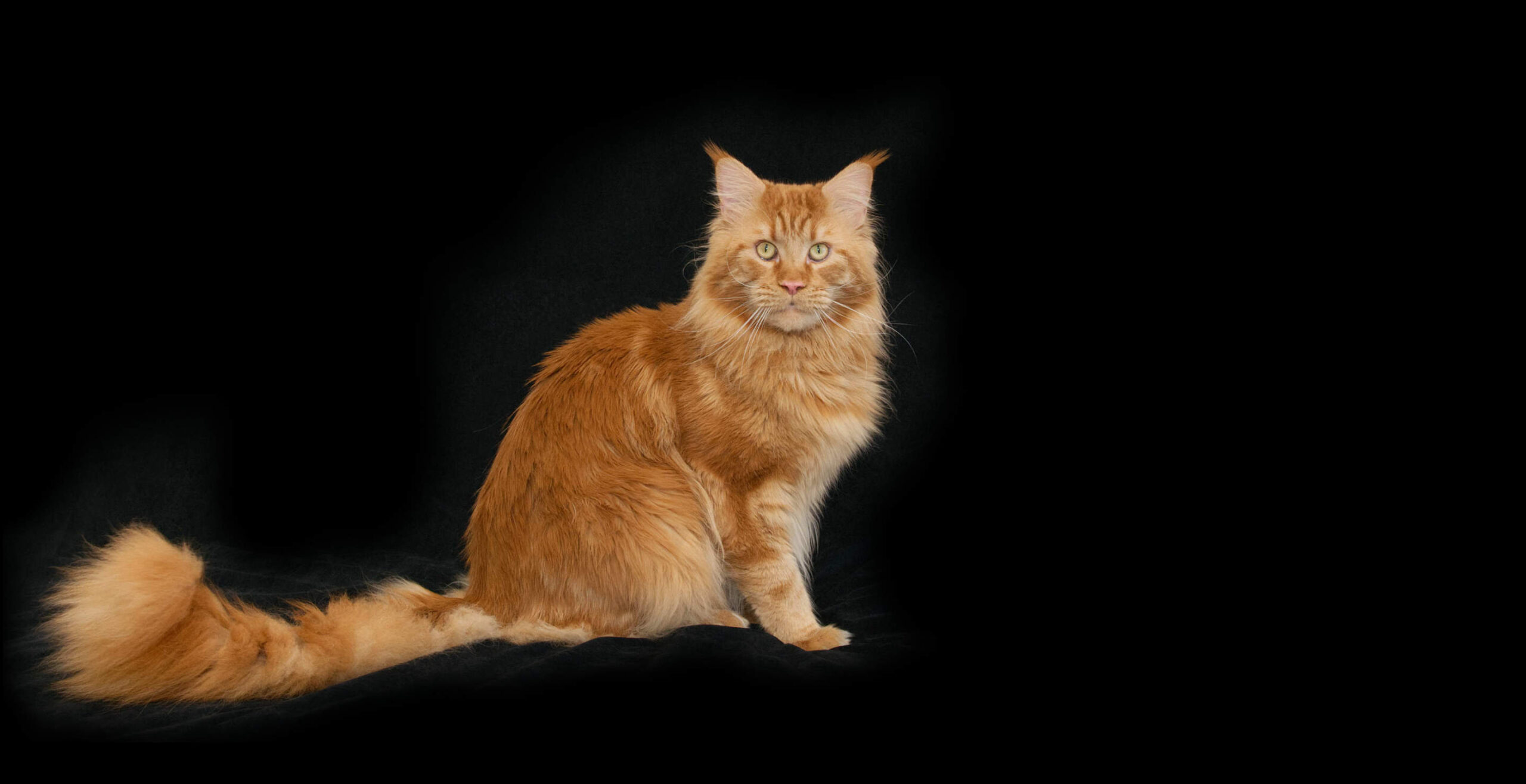
As a Maine Coon breeder, molecular geneticist, and medical doctor (though I no longer practice clinically), I’m often asked if this majestic breed is hypoallergenic. The short answer is no. Like all felines, Maine Coons produce the Fel d 1 cat allergen in their saliva, skin, and dander. However, there’s a specific anatomical quirk in this breed that deserves attention — and it’s one that most allergy articles conveniently overlook.
Maine Coons have a condition commonly known as “stud tail” — a hyperactive sebaceous gland region on the upper (proximal 1/3) portion of the tail. These glands secrete higher-than-average amounts of the Fel d 1 glycoprotein, making intact males (and even some intact females at DLuxxy) a more potent source of allergens. This greasy, waxy buildup isn’t just a cosmetic nuisance — it’s a concentrated reservoir of the very protein that triggers human allergic reactions. Regular grooming and cleaning of this area can help, but it’s a factor that many allergy sufferers overlook until it’s too late.
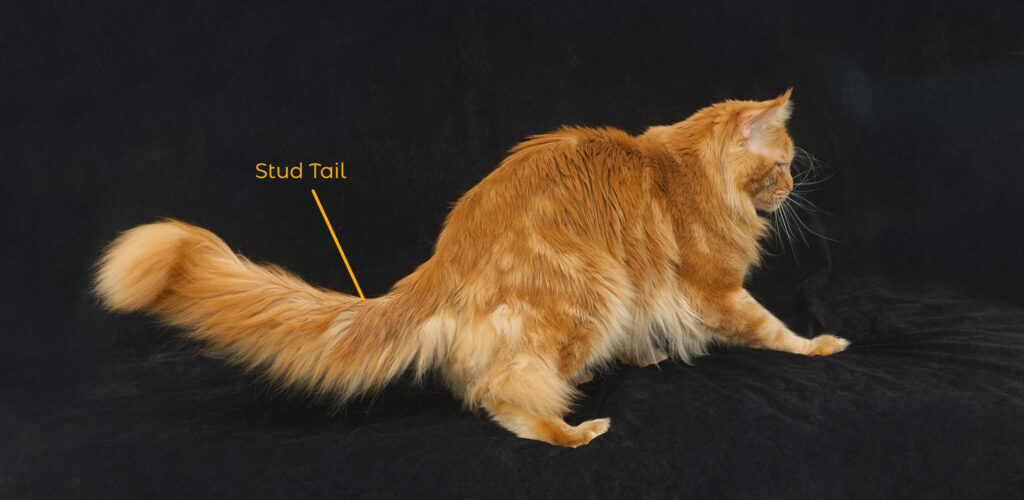
In contrast, the Maine Coon’s predecessor, the Siberian — often recommended as a hypoallergenic breed — is reported to produce lower-than-average levels of Fel d 1, making it a better choice for those with significant sensitivities. The Maine Coon, on the other hand, produces levels typical for a cat, and with the added stud tail factor, intact males may produce even more. (If you’re wondering, yes — we do warn our clients about this. Honesty is part of the DLuxxy package.)
That said, Maine Coons are not particularly heavy shedders relative to some short-haired breeds, and their grooming style can be less frenetic than others. This is why some people with mild sensitivities report fewer symptoms around them. From my experience, individual variation is everything. Each cat produces different amounts of Fel d 1, and each person’s sensitivity is unique. I’ve had clients — even those who bought intact males — who found that their love for the breed outweighed their allergy symptoms. That’s not science; that’s devotion.
For anyone considering a Maine Coon, the advice remains the same: spend time with the individual cat to gauge your reaction, implement the environmental controls discussed in this article, and never rely on a breed label alone. The magnificent Maine Coon is a wonderful companion, but honesty about their allergenic tendencies is essential.
Can People Develop Tolerance to Fel d 1?
This is one of the most fascinating — and misunderstood — aspects of cat allergies. The short answer is yes, but not in the way most people think.
The Myth of “Natural” Tolerance
Let me start with what doesn’t work: simply living with a cat and hoping your immune system will eventually give up. There’s no scientific evidence that casual, repeated exposure to a cat in your home will make your allergies disappear. In fact, it can often make symptoms worse over time, as continued exposure keeps the immune system on high alert. Continuous, high-dose exposure to cat allergens (primarily Fel d 1) constantly restimulates the immune system rather than training it to ignore the protein.
The body’s natural defense fails to create permanent tolerance for several reasons:
- High, Uncontrolled Allergen Doses: True immune tolerance (such as with allergy shots) requires starting with micro-doses of an allergen and gradually increasing them over years. Living with a cat exposes your immune system to constant, fluctuating, and often heavy loads of dander and saliva, which triggers an allergic response rather than a tolerant one.
- Antibody Misdirection: Instead of developing tolerance, cat owners often produce increased levels of IgG4 and IgE antibodies. These circulating antibodies continuously recognize the Fel d 1 protein as an invader rather than safely adapting to it.11 12 13 14
- Rapid Allergen Ubiquity: Cat allergens are incredibly sticky and lightweight. They cling to clothing, furniture, and dust, remaining active in the environment for months, making it impossible for the immune system to get a break.11 12 13 14 16
- Sensitization Risk: Studies show that acquiring a cat as an adult can actually double the risk of developing new or worsened allergic sensitization.
Think of it like this: your immune system isn’t a grumpy neighbor who eventually warms up to you. It’s more like a security guard who really takes their job seriously. Each time you walk past with a cat allergen, they sound the alarm again.
The Science of Induced Tolerance
Allergen-specific immunotherapy (AIT) is the real deal. This is a medical treatment where purified concentrates of the Fel d 1 cat allergen are introduced to your system through injections (allergy shots) or under-the-tongue tablets (sublingual immunotherapy) in a very controlled fashion.
Here’s how it works: over time, these controlled exposures desensitize your immune system, training it to tolerate gradually larger amounts of the allergen. The results are impressive — AIT has an efficacy of 85%–90% in reducing allergen sensitivity. However, it’s a commitment: it typically takes 3–6 months before you notice any relief, and 12–14 months before you reach full symptom reduction, with weekly visits required throughout.
Recent research points to a promising new direction for cat allergy treatment. Scientists are exploring the use of a high dose of a synthetic DNA sequence, called CpG adjuvant, alongside Fel d 1. In preclinical studies, this combination not only reversed all major hallmarks of allergy but also did something fascinating: it appeared to create a new, highly effective class of regulatory immune cells that seem specifically tailored to maintain long-term tolerance to the cat allergen. This suggests that the formulation of the treatment—particularly using a high dose of the adjuvant — is absolutely critical for success. The ultimate message is clear: the science is progressing, and we are getting closer to a future where living in harmony with cats doesn’t have to be a battle for your immune system.
The Real-World Mystery: Why Some People Adapt
Now here’s where it gets interesting — and where my experience as a breeder comes in. Like some other catteries, I’ve had clients who report their allergies improving after living with a Maine Coon. Some of my clients — even those who bought intact males — found that their love for the breed outweighed their allergy symptoms.
So what’s happening here? A few possibilities:
- Individual variation is massive. Each cat produces different amounts of Fel d 1, and each person’s sensitivity is unique. What triggers one person might barely register for another.
- Hormonal factors matter. Intact males produce the most Fel d 1, followed by neutered males, while spayed females produce the least. This is why some people tolerate certain cats better than others — and why at DLuxxy, we’re upfront about our males’ and even some females’ “stud tail” status.
- The hygiene hypothesis suggests that some immune systems may calm down with repeated exposure to a familiar allergen — but this is far from guaranteed and not a reliable strategy.
The DLuxxy Bottom Line
Here’s what I tell my clients: Don’t count on natural tolerance. It’s a gamble, not a strategy. If you have mild allergies and you’re determined to bring home a Maine Coon, be prepared with management strategies — and consider consulting an allergist about immunotherapy.
The good news? Science is advancing. From high-dose CpG adjuvants to peptide-based treatments, researchers are developing better ways to induce genuine, lasting tolerance to Fel d 1. A future where we can enjoy a purr without a box of tissues might not be far off.
But for now, I recommend the honest approach: know your limits, manage your environment, and if you’re willing to put in the work, immunotherapy can be a game-changer.
The Future: A Note of Caution
Understanding Fel d 1’s structure has opened doors to some fascinating possibilities. Scientists are exploring everything from monoclonal antibody treatments that neutralize the allergen in humans to using gene-editing technology like CRISPR to create truly hypoallergenic cat breeds that simply don’t produce the troublesome protein. The goal? A future where we can appreciate a cat’s affection without the inevitable box of tissues by our side. As a Maine Coon breeder and molecular geneticist, I approach this genome alteration with healthy skepticism at the moment.
Our cats are not just vehicles for proteins — they are complex beings shaped by millennia of evolution and selective breeding. The function of Fel d 1 may remain mysterious, but its presence across feline species suggests it serves some purpose, even if subtle. Altering the wild genes of our domestic companions is a step that demands careful consideration and respect for the animals we love. (Also, have you ever tried to explain CRISPR to a cat? They’re not impressed. They just want treats.)
Key Takeaway: Gene-editing could create truly hypoallergenic cats, but the ethical and biological implications require careful consideration.
Practical Steps to Reduce Cat Allergens Naturally
Living with a cat when you have allergies requires strategy, not surrender. While no single solution is a magic bullet, combining several approaches can dramatically reduce symptoms and make life more comfortable for everyone — feline and human alike.
Environmental Management: Your Home as a Sanctuary
The key to managing cat allergies is reducing your exposure to the Fel d 1 cat allergen that accumulates throughout your home. Here are some of the most effective strategies to reduce cat allergens naturally:
Create a Cat-Free Sanctuary – The bedroom is where you spend roughly a third of your life. Making it a “no-cat zone” can significantly reduce your overnight exposure to allergens. After thoroughly cleaning the room, keep the door closed and don’t let your feline friend sneak in — and we all know how persistent they can be. (The record for a cat opening a door is approximately 0.3 seconds. You’ve been warned.)
Invest in HEPA Air Purifiers – High-Efficiency Particulate Air (HEPA) filters are one of the most effective tools for reducing airborne allergens. In a controlled study, HEPA H13 filtration reduced airborne Fel d 1 levels from 36.3 ng/m³ to just 4.7 ng/m³, and significantly decreased bronchial symptoms in allergic participants. While the clinical impact on nasal symptoms varies, the respiratory benefits are compelling.
Choose Your Vacuum Wisely – Not all vacuums are created equal. A vacuum with a HEPA filter traps allergens rather than just pushing them back into the air. Standard vacuums can actually make symptoms worse by redistributing fine particles. (It’s like using a leaf blower to clean your living room — technically cleaning, but also making everything worse.)
Reduce Upholstered Surfaces – Carpets, sofas, curtains, and bedding are allergen magnets. Dander clings to fabric fibers and is difficult to remove completely. Consider replacing wall-to-wall carpeting with hard flooring, and choose furniture with smooth, washable surfaces. For existing upholstery, clean it frequently and use allergen-proof covers where possible. I use a steamer on carpets and fabric upholstery to denature the proteins — it’s satisfying and effective.
Clean on a Schedule, Not a Whim – Regular cleaning is essential, but be aware that cleaning itself can stir up allergens. If you’re sensitive, consider wearing a mask while dusting, vacuuming, or sweeping. Focus on hard surfaces, fan blades, walls, and any area where dander can settle.
Wash Linens Frequently – Wash your bedding, curtains, and cushion covers regularly in hot water. Don’t forget your cat’s bedding, toys, towers, and favorite blankets — they’re prime real estate for allergens.
Key Takeaway: HEPA filters, smart vacuuming, and reducing upholstered surfaces significantly reduce airborne Fel d 1 levels.
Cat-Centered Strategies: Tackling the Source
Beyond cleaning your environment, you can take steps to reduce cat allergens naturally by targeting the source — your cat.
Grooming: A Delicate Balance – Bathing a cat can temporarily reduce the amount of Fel d 1 on their fur and skin, but the effect is short-lived — typically lasting less than a week, with allergens returning within 1-2 days of washing. Weekly bathing is often recommended, but this can be stressful for cats and may dry out their skin, potentially increasing dander production. If you choose to bathe your cat, use an allergen-reducing shampoo designed specifically for felines. For cats that resist water, dander-reducing wipes or waterless shampoos can be a gentler alternative. (Also, have you ever tried to bathe a cat? It’s less “spa day” and more “horror movie.”)
Regular Brushing – Brushing your cat outdoors or in a well-ventilated area can remove loose fur and dander before they spread through your home. If brushing makes your allergies flare, consider wearing a mask or having a non-allergic family member handle the task. (This is a great job for the person who “doesn’t really like cats” — they’ll learn to appreciate them.)
The Litter Box: A Hidden Hub – The litter box is a surprising reservoir of allergens, including Fel d 1 from urine, saliva, and feces, not to mention dust from the litter itself.
- Delegate cleaning – If possible, have a non-allergic person scoop the litter box daily.
- Wear a mask and goggles – If you must clean it yourself, wear a mask and goggles and wash your hands thoroughly afterward.
- Choose low-dust litter – Traditional clay litters can release clouds of irritating dust. Consider hypoallergenic alternatives like paper, cassava, or tofu-based litters, which produce minimal dust.
- Clean the box thoroughly – Empty and wipe down the box with soap and water at least once a month, and wipe the surrounding floor and walls weekly.
- Wipe the paws – Some allergy sufferers find it helpful to wipe their cat’s paws with pet-safe wipes after litter box use to reduce tracking.
Key Takeaway: Regular grooming, brushing, and litter box maintenance can significantly reduce Fel d 1 levels in your home.
Dietary Interventions: An Emerging Frontier
Our homemade raw diet recipe contains raw eggs from our free-ranging chickens. The eggs contain IgY (Immunoglobulin Y) antibodies that neutralize Fel d 1 in the cat’s saliva while they eat, reducing how much allergen is transferred to their fur and skin during after meal grooming.15
Clinical studies have shown that this approach can reduce active Fel d 1 levels by an average of 47% after consistent feeding (typically about three weeks), with some cats experiencing even greater reductions. A proof-of-concept study using the MASK-air mobile app found that allergic owners whose cats ate this food reported significant symptom improvement, particularly for rhinitis. However, as researchers note, larger, controlled studies are needed to confirm these promising results.
Omega-6 fatty acids stimulate sebaceous glands to produce more Fel d 1 protein. In contrast, Omega-3 fatty acids help reduce inflammation, which can minimize the production and airborne spread of dander and allergens. So feeding a diet rich in Omega-3s — think fish oil — might actually help reduce cat allergens naturally from the inside out. (It’s like a spa treatment for your cat’s skin, minus the claw marks.)16
Dietary composition may also play a role. The balance of omega fatty acids and the presence of polyphenols can influence sebaceous gland activity and, potentially, Fel d 1 production.
Key Takeaway: Foods containing anti-Fel d 1 antibodies (IgY) and balanced omega fatty acids may help reduce allergen levels.
A Word on Professional Help
If you have moderate to severe allergies, consulting an allergist is a crucial first step. They can confirm your specific triggers, assess the severity of your allergy, and recommend a tailored combination of environmental controls, medications (like antihistamines or corticosteroids), or immunotherapy (allergy shots) that can desensitize your immune system over time.
As a Maine Coon breeder, I know that every cat is an individual, and what works for one household may not work for another. The goal isn’t to eliminate the cat — it’s to find the balance that allows you to enjoy your feline companion without constant discomfort. Because let’s be honest — a little sneeze is a small price to pay for a purr.
References:
- Katie Brady (2025, May 1). Genomic survey uncovers evolutionary origins of secretoglobins. https://www.igb.illinois.edu/article/genomic-survey-uncovers-evolutionary-origins-secretoglobins ↩︎
- Holger Scheib, et al. (2020, Jan 28). The Toxicological Intersection between Allergen and Toxin: A Structural Comparison of the Cat Dander Allergenic Protein Fel d1 and the Slow Loris Brachial Gland Secretion Protein. Toxins. https://pmc.ncbi.nlm.nih.gov/articles/PMC7076782/ ↩︎
- Simone Colosimo et al.; (2025, September 9); Innovative Strategies to Reduce Exposure and Expression of the Major Cat Allergen Fel d 1.; National Library of Medicine; https://pmc.ncbi.nlm.nih.gov/articles/PMC12417962/ ↩︎
- Bienboire-Frosini, C., et al. (2011, October 31). Immunological differences in the global release of the major cat allergen Fel d 1 are influenced by sex and behaviour.” Journal of Veterinary Behavior. https://www.sciencedirect.com/science/article/abs/pii/S1090023311003856 ↩︎
- J Jalil-Colome, et al. (1996, July). Sex difference in Fel d 1 allergen production. The Journal of Allergy and Clinical Immunology. https://pubmed.ncbi.nlm.nih.gov/8765830/ ↩︎
- Cécile Bienboire-Frosini, et al. (2020, Feb 18). The Major Cat Allergen Fel d 1 Binds Steroid and Fatty Acid Semiochemicals: A Combined In Silico and In Vitro Study. International Journal of Molecular Sciences. https://pmc.ncbi.nlm.nih.gov/articles/PMC7073184/ ↩︎
- Kaiser, L., et al. (2003, September 26). The crystal structure of the major cat allergen Fel d 1, a member of the secretoglobin family.Journal of Biological Chemistry. https://www.sciencedirect.com/science/article/pii/S0021925820833389 ↩︎
- Mootz, M., et al. (2021, August 3). Secretoglobins in the big picture of immunoregulation in airway diseases. European Journal of Allergy and Clinical Immunology. https://onlinelibrary.wiley.com/doi/10.1111/all.15033 ↩︎
- Are Javanese cats hypoallergenic? Adopt a Pet. https://www.adoptapet.com/answers/are-javanese-cats-hypoallergenic ↩︎
- Alora Bopray (2025, Oct 31). 15 Hypoallergenic Cat Breeds for People With Allergies. Forbes. https://www.forbes.com/advisor/a/hypoallergenic-cat-breeds-forbes/#how_much_do_hypoallergenic_cat_breeds_cost_section ↩︎
- Mootz, M., et al. (2021). Secretoglobins in the big picture of immunoregulation in airway diseases. European Journal of Allergy and Clinical Immunology. ↩︎
- Kaiser, L., et al. (2003). The crystal structure of the major cat allergen Fel d 1. Journal of Biological Chemistry. ↩︎
- Chapman, M.D., et al. (2024). Genetic diversity of the major cat allergen, Fel d 1. PNAS Nexus. ↩︎
- Catwatch Newsletter. (2020). Allergy Control for Cat Owners. ↩︎
- (2019, Jul 18). A Novel Approach to the Reduction of Cat Allergen Fel d1 Through Inclusion of an Egg Product Ingredient Containing Anti-Fel d1 IgY Antibodies in the Feline Diet. Division of Allergy and Immunology, Department of Medicine, Washington
University School of Medicine, St. Louis, Missouri, USA ↩︎ - Simone Colosimo et al. (2025, September 9). Innovative Strategies to Reduce Exposure and Expression of the Major Cat Allergen Fel d 1. Clinical and Translational Allergy, 15(9): e70098. https://pmc.ncbi.nlm.nih.gov/articles/PMC12417962/ ↩︎
Leave a Reply